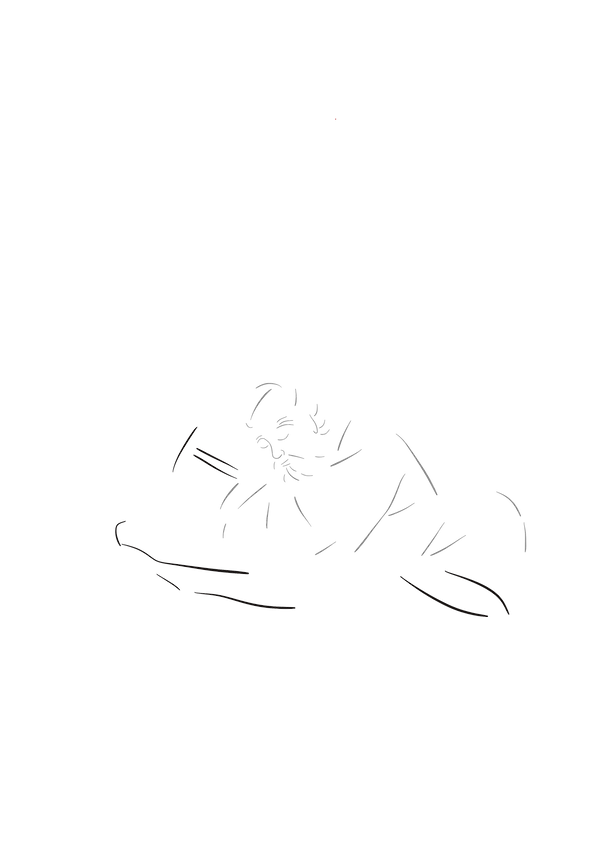
藻荇風插畫:〈歇息〉|Alllgae Illustration: Rest|藻荇画:憩い(いこい)
藻荇風作品〈歇息〉,取材自南宋馬遠〈秋江漁隱〉,以極簡線條重構人物歇息之姿,呈現夢與現實之間尚未鬆手的狀態。The Alllgae-style illustration Rest reinterprets Ma Yuan’s Autumn River, Fisherman at Rest, portraying a moment where rest is incomplete and reality is still held close. 藻荇風の線画憩いは、馬遠秋江漁隠を再構成し、眠りと現実のあいだに留まる未完の休息を描き出す。

取材自馬遠〈秋江漁隱軸〉
Inspired by Ma Yuan’s Autumn River, Fisherman at Rest
馬遠『秋江漁隠軸』に取材
.
.
.
.
〈人想睡,但現實還在懷裡〉
我這幅畫,取材自南宋馬遠的〈秋江漁隱軸〉。原畫中,江水空闊,一舟停泊,漁人閒坐舟上,遠離塵囂。那是一種被後人反覆欣賞的境界:世界很大,人退居一隅,於山水邊緣安放自身。看畫的人,也往往在這樣的畫面裡,替自己想像一個可以暫時不必負責的位置。
我一開始也是循着這條路進去的。畫舟,畫人,畫槳,畫留白。線條愈畫愈少,構圖愈來愈簡,彷彿只要把不必要的東西一一拿走,畫面自然就會安靜下來。然而畫到某一刻,我忽然發現:畫面是靜了,人卻沒有真正放鬆。
於是,我停下來,看那個人。
那個人並不是閒坐。他低着頭,身體內縮,像是睡着了,又像只是閉目歇息。更重要的是——他懷裡抱着一支槳。
這一點,在原作中或許並不顯眼,但在我的轉寫裡,卻不應省略。槳不是風景,它是器物;不只是象徵隱逸的道具,更是屬於現實的東西。它用來划水、定向、前行,是不能缺少的漁隱工具。
人若真要閒,理應放下槳。可他沒有。
我在畫法上作了一個決定:舟與槳,用黑線;人,用灰線。舟與槳取橫勢,壓在畫面下方;人物衣褶取直勢,向下垂落。兩者之間,刻意留出一度橫向的空白,不相連,不相接。
這樣的處理,乍看像是分離,其實不是。因為真正的聯繫,早已在姿態中完成了——人抱着槳。
那一刻,我才意識到,這幅新的畫已不是在談「漁隱」。它談的是另一種更現代、也更難說出口的狀態。
人想睡,但現實還在懷裡。
我忽然想起自己曾經做過的夢。夢裡不是山水,也不是奇境,而是開會、監考、點名。場景與白天沒有分別,只是人已經很累。夢並沒有帶我離開現實,只是把現實換了一種較為模糊的方式,繼續進行。原來,人並非總能在夢中逃離;有時,夢只是讓我們在不清醒的狀態下,繼續抱着那些放不下的東西。
於是,我明白了,這幅畫取材馬遠,卻另走方向。馬遠的漁隱,是把人放進江湖;而我這一幅,是把塵世放回人的身體。原作讓畫中人熟睡,我只讓畫中人歇息——不是因為不知道往哪裡去,而是暫時沒有力氣划動。
所以,這幅畫在構圖上不再追求「一角」的和諧,而是容許對峙;在線條上不再服務景物,而是承載重量;在立意上,也不再指向理想,而是停留在一個誠實的處境裡。
它沒有要說教,也沒有要控訴。它只是靜靜地呈現一個我們都可能經歷的時刻:
人已經閉上眼睛了,但手,還沒有鬆開。
.
.
One Wants to Sleep, Yet Reality Is Still Held Close
.
This painting of mine takes its point of departure from Ma Yuan’s Autumn River, a Fisherman at Rest of the Southern Song dynasty. In the original work, the river opens wide, a single boat rests upon the water, and the fisherman sits quietly within it, removed from worldly concerns. It is an image that later generations have returned to again and again: the world is vast, the human figure withdraws to the margin, finding a place to settle at the edge of landscape. Those who look at the painting often imagine, for themselves, a moment in which responsibility can be temporarily set aside.
I began along that same path. I drew the boat, the figure, the oar, the blank space. The lines grew fewer, the composition simpler, as though calm would naturally emerge once all that was unnecessary had been removed. Yet at a certain point, I realized something was amiss. The image had grown quiet, but the person within it had not truly relaxed.
So I stopped and looked again—at the person.
He is not simply sitting at ease. His head is lowered, his body drawn inward, as though asleep, or perhaps only resting his eyes. More importantly—he is holding an oar in his arms.
This detail may not stand out in the original work, but in my reworking, it should not be omitted. The oar is not scenery; it is an object. It is not merely a symbolic prop of reclusion, but something that properly belongs to reality. It is used to row, to set direction, to move forward—an indispensable tool of the fisherman’s reclusive life.
If one were truly at leisure, the oar ought to be put down. But he has not done so.
This led me to a decision in how the painting would be made: the boat and the oar are drawn in black lines; the figure in gray. The boat and oar stretch horizontally, pressing down upon the lower part of the image; the folds of the figure’s clothing fall vertically, pulling downward. Between the two, I deliberately leave a narrow band of horizontal blankness—unconnected, untouched.
At first glance, this may appear to be separation. In truth, it is not. The real connection has already been completed through posture alone—the figure is holding the oar.
At that moment, I understood that this new painting was no longer about “reclusion.” It was pointing instead toward a more modern condition, one that is harder to put into words.
One wants to sleep, yet reality is still held close.
I found myself thinking of dreams I have had in the past. Dreams not of mountains or strange realms, but of meetings, examinations, roll calls. The settings were no different from daytime; only the person within them was exhausted. The dream did not carry me away from reality. It merely allowed reality to continue, in a blurred and half-conscious form. It turns out that one does not always escape in dreams. Sometimes, dreams only allow us to keep holding what we cannot yet put down.
Thus I came to understand that while this painting takes its material from Ma Yuan, it proceeds in another direction. Ma Yuan’s vision of reclusion places the human figure within river and landscape; my own returns the worldly realm to the human body. The original allows its figure to sleep soundly. I allow mine only to rest—not because the way forward is unknown, but because, for the moment, there is no strength left to row.
For this reason, the composition no longer seeks the harmony of the “one-corner” arrangement, but allows tension to remain. The lines no longer serve the depiction of scenery, but carry weight. The intention no longer points toward an ideal, but stays with an honest condition.
It does not wish to instruct, nor does it accuse. It simply presents, quietly, a moment that many of us have experienced:
The eyes are already closed, but the hands have not yet let go.
眠りたいのに、現実はまだ腕の中にある
この一枚の絵は、南宋の画家・馬遠による秋江漁隠軸を取材としている。原作では、江は広くひらけ、一艘の舟が水面にとどまり、漁人は舟の上に静かに身を置いている。俗世から離れ、山水の縁に身を預ける――その境地は、後世に繰り返し愛されてきた。画を見る者もまた、その空間の中に、一時的に責任を下ろせる場所を思い描くことが多い。
私も当初は、その道筋に沿っていた。舟を描き、人を描き、櫂を描き、余白を描く。線は次第に減り、構図は簡素になっていった。不要なものを取り除いていけば、画面は自然に静まるはずだ――そう思っていた。しかし、ある段階で気づいた。画面は静かになったが、そこにいる人は、まだ本当に休んでいない。
そこで私は筆を止め、その人物を見つめ直した。
その人は、ただ安らかに座っているわけではない。頭を垂れ、身体を内側にすぼめ、眠っているようでもあり、ただ目を閉じているだけのようでもある。そして何より重要なのは――彼が櫂を抱いているということだ。
この点は、原作ではさほど目立たないかもしれないが、私の転写においては省いてはならない。櫂は風景ではなく、器物である。それは隠逸を象徴する小道具にとどまらず、むしろ現実に属するものだ。水を漕ぎ、方向を定め、前へ進むための、欠くことのできない漁隠の道具なのである。
もし本当に閑であるなら、櫂は手放されているはずだ。しかし、彼はそうしていない。
そこで私は、画法において一つの決断をした。舟と櫂は黒い線で、人は灰色の線で描く。舟と櫂は横勢をとり、画面の下部を押さえる。人物の衣の襞は縦に垂れ、下へと沈む。そのあいだには、横に走る一筋の余白を意図的に残し、互いを結ばず、触れさせない。
一見すると、これは分離のように見えるかもしれない。しかし、実際はそうではない。真のつながりは、すでに姿勢の中で完結している――人は櫂を抱いている。
その瞬間、私はこの新しい絵が、もはや「漁隠」を語るものではないと悟った。それが指し示しているのは、より現代的で、言葉にしがたい状態である。
眠りたいのに、現実はまだ腕の中にある。
私は、かつて見た夢のことを思い出した。夢の中にあったのは、山水でも奇境でもなく、会議や試験監督、点呼といった日常の場面だった。舞台は昼間と変わらず、ただ人だけがひどく疲れていた。夢は私を現実から連れ去らなかった。ただ、現実を少し曖昧なかたちで、半ば意識のまま続けさせただけだった。人は必ずしも、夢の中で逃げられるわけではない。ときに夢とは、まだ手放せないものを、眠りの中で抱え続ける時間なのかもしれない。
こうして私は、この絵が馬遠を取材としながらも、別の方向へ進んでいることを理解した。馬遠の漁隠は、人を江湖の中に置くが、私の一枚は、塵世を人の身体へと戻す。原作が画中の人物に深い眠りを許すなら、私の絵が与えるのは歇息にすぎない――行き先が分からないからではなく、ただ今は、漕ぐ力が残っていないからだ。
そのため、この絵はもはや「一角構図」の調和を求めない。対峙を許す。線は景物に仕えるのではなく、重さを担う。意図は理想へ向かわず、ただ正直な状態の中にとどまる。
この絵は、教えようともしないし、告発もしない。ただ静かに、私たちの多くが経験したことのある一瞬を差し出している。
目はすでに閉じている。けれど、手はまだ離していない。