留白,不止於畫面
——藻荇畫中的三種白
在繪畫史中,留白從來不是陌生的手法。山水畫中的雲水、文人畫中的空境,都以白示之,使氣韻得以流動,視線得以歇息。
然而,多數情況下,留白仍被視為一種輔助性存在。它為主體讓路,為形象服務,即使重要,仍然是被留下來的部分。
藻荇畫所嘗試處理的,正是這個長久未被徹底追問的問題:如果留白不再是被留下來的,而是首先成立的,那麼畫會如何運作?
在藻荇畫中,留白不再只是配置空間的結果,而是畫面一開始便取得主導位置的存在。線條,反而是在其後才被允許出現的事物。
一、留白是什麼:從配置空間到主體位置
留白並不是「沒有畫」。它是被安排、被控制、被賦予作用的空間,影響視線的去向、畫面的節奏,以及觀看者停留的方式。
在傳統理解中,即使留白被高度重視,其主體地位仍然清楚:形象在先,留白在後。
藻荇畫在此採取了不同的立場。畫面不是先有形象,再留下空白,而是先確立留白,再決定線條是否、以及如何出現。這並非技法上的節制,而是主體位置的重新配置。
二、〈白〉:留白作為法度(畫內之白)
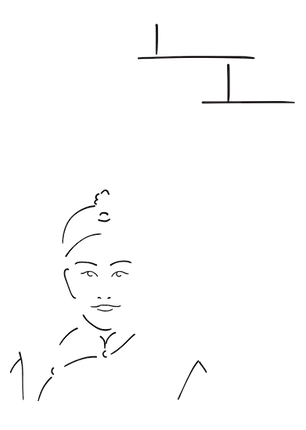
〈白〉所描繪的對象,是清末皇帝光緒帝。
在構圖上,人物被刻意安置於畫面的左下方。畫面未採取任何置中或強化主體的安排,而是讓人物處於一個受壓的位置。
光緒帝左側原可延伸的線條,被刻意抹去,使其幾乎沒有退讓空間。這種刪除不是簡化形象,而是一種結構性的限制:線條在此被允許存在,但只能在白所劃定的範圍之內。
畫面的右上方,僅保留少量磚牆線條。它們並未形成完整背景,卻足以提示:畫面中央那一大片留白,並非空無,而仍是磚牆的延續。
在這樣的配置下,留白並不是襯托人物的空間,而是比人物更早成立、也更具主權的存在。
三、〈浸〉:留白作為狀態(可居之白)
〈浸〉的構圖採取左右分置。畫面右方是一隻正在泡溫泉的日本獼猴,形體安定,姿態放鬆,佔據相對明確的位置。
畫面左方則只出現一圈細微的漣漪。它不是主體,卻成為畫面中唯一的變化。
獼猴的右眼似乎正看向那一圈漣漪。這條視線,使得留白不再只是空間,而成為兩者之間正在發生關係的場域。
畫面並未提供事件的結果,也未引導視線走向特定終點。觀看者只能在主體與漣漪之間來回移動。
在〈浸〉中,留白不施加壓力,也不建立邊界,而是成為一種可被承受、可反覆停留的狀態。
四、〈在〉:留白作為通道(畫外之白)
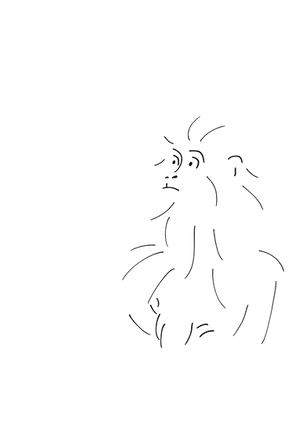
〈在〉採取偏置構圖。金絲猴位於畫面的右側,身體朝向畫內,但視線指向畫面的左方。
左側留白並未被設定為具體對象。視線因此無法在畫面中完成,而被迫持續延伸。
在構圖上,這意味著畫面本身不提供觀看的終點。留白在此不再負責平衡畫面,而是成為一個導向畫外的出口。
這一構圖源自一九八〇年的中國猴年郵票,但畫中未沿用原有的置中安排,而是將猴子移至畫面一側,並重新解讀其視線方向,使觀看不再停留於畫面之內。
結語:當畫完成於退場之時
多數繪畫的任務,是把觀看者留下來。構圖、細節與敘事,都是為了延長停留。
藻荇畫在此提出另一種可能:畫不一定要佔據注意力,也可以在完成自身後,將觀看者送回世界。
當留白成為主體,畫面不必被填滿,也不需要被解讀至盡。它只需成立一次,然後退場。
藻荇風專欄|留白不止於畫面:藻荇畫中的三種白 | Alllgae Style Column: White Beyond the Picture Plane | 藻荇風コラム:画面を超える白
本文以〈白〉、〈浸〉、〈在〉三幅藻荇畫為例,從構圖與視線配置分析留白如何在藻荇畫中成為主體,並由畫內推進至畫外,提出不同於傳統繪畫的留白結構觀點。| This column examines three Alllgae Image works—White, Immersed, and Being—to analyze how white space functions as the primary subject through composition and gaze, extending from within the image to beyond the picture plane.| 本稿は〈白〉〈浸〉〈在〉の三作を通して、藻荇画における余白が構図と視線配置によって主体化され、画面内から画外へと展開していく構造を考察する。

White Beyond the Picture Plane
— Three Modes of White in Alllgae Image
In the history of painting, white space has never been unfamiliar. In landscape painting, clouds and water are rendered through emptiness, allowing breath and vision to flow and rest.
Yet in most cases, white space is still regarded as auxiliary. It yields to the subject, serves the image, and remains something left behind, however important it may be.
Alllgae Image addresses a question long left unresolved: if white is no longer what remains after the image, but what is established first, how does a painting operate?
In Alllgae Image, white is not the result of spatial arrangement. It assumes a leading position from the outset. Lines, by contrast, are elements permitted to appear only afterward.
I. What Is White: From Spatial Arrangement to Subject Position
White does not mean that nothing is drawn. It is space that is arranged, controlled, and assigned function, shaping the movement of the gaze, the rhythm of the image, and the duration of viewing.
In conventional understanding, even when white is highly valued, the hierarchy remains clear: the image comes first, white follows.
Alllgae Image takes a different stance. The image is not formed first with white left over; white is established first, and only then is it decided whether lines may appear, and in what manner. This is not technical restraint, but a reconfiguration of subject position.
II. White: White as Law (White Within the Image)
White depicts the Guangxu Emperor of the late Qing dynasty.
In its composition, the figure is deliberately placed in the lower left of the picture. There is no centering or elevation of the subject; instead, the figure occupies a position under pressure.
Lines that might have extended on the figure’s left are intentionally erased, leaving almost no room for retreat. This removal is not simplification but structural constraint: lines are allowed to exist only within the boundary set by white.
In the upper right, a small number of brick lines remain. They do not form a complete background, yet they indicate that the vast white area in the center is not emptiness, but a continuation of the wall.
Here, white does not support the figure. It precedes and governs it.
III. Immersed: White as State (Habitable White)
Immersed adopts a left–right composition. On the right sits a Japanese macaque bathing in a hot spring, stable in form and relaxed in posture.
On the left appears only a small ripple. It is not a subject, yet it is the sole point of change in the image.
The macaque’s right eye seems to look toward the ripple. Through this line of sight, white ceases to be mere space and becomes a field in which a relationship unfolds.
The image offers no outcome and no visual destination. The viewer’s gaze moves repeatedly between the figure and the ripple.
In Immersed, white neither imposes pressure nor establishes boundaries. It becomes a state that can be inhabited and revisited.
IV. Being: White as Passage (White Beyond the Image)
Being employs an off-center composition. A golden snub-nosed monkey is positioned on the right, its body oriented inward, while its gaze extends toward the left.
The white space on the left is not defined as an object. As a result, the gaze cannot be completed within the image and is compelled to continue outward.
Compositionaly, this means the image provides no endpoint for viewing. White no longer balances the picture; it functions as an exit leading beyond the frame.
This composition is derived from a 1980 Chinese Year of the Monkey postage stamp. The monkey is moved away from the center, and its gaze is reinterpreted so that viewing no longer remains within the picture plane.
Conclusion: When a Painting Is Completed by Withdrawal
Most paintings aim to keep the viewer within the image. Composition, detail, and narrative all serve to prolong attention.
Alllgae Image proposes another possibility: a painting does not have to retain the gaze. It may, after establishing itself, return the viewer to the world.
When white becomes the subject, the image no longer needs to be filled or exhausted by interpretation. It needs only to be established once—and then withdraw.
画面を超える白
藻荇風專欄|留白不止於畫面:藻荇畫中的三種白 | Alllgae Style Column: White Beyond the Picture Plane | 藻荇風コラム:画面を超える白
——藻荇画における三つの白
絵画史において、白は決して新しい技法ではない。山水画では雲や水が白として示され、文人画では余白が気韻と視線の休止を可能にしてきた。
しかし多くの場合、白は補助的な存在として理解されてきた。主題に道を譲り、形象に仕え、重要であっても「残された部分」であり続けている。
藻荇画が問いかけるのは、もし白が「残されたもの」ではなく「最初に成立するもの」だとしたら、絵はどのように機能するのか、という点である。
藻荇画において、白は空間配置の結果ではない。画面の初めから主導的な位置を占める存在である。線は、その後にようやく許可されて現れる要素にすぎない。
一、白とは何か——空間配置から主体位置へ
白とは「何も描かれていない」ことではない。それは配置され、制御され、役割を与えられた空間であり、視線の動き、画面のリズム、鑑賞の時間を形づくる。
従来の理解では、白がいかに重視されていても、主体の位置は明確であった。形象が先にあり、白は後に続く。
藻荇画は異なる立場をとる。まず白を確立し、その上で線が現れるかどうか、どのように現れるかが決まる。これは技法の抑制ではなく、主体位置の再配置である。
二、白:法度としての白(画面内の白)
白に描かれているのは、清末の皇帝・光緒帝である。
構図において、人物は画面左下に意図的に配置されている。中央に置かれることも、主題として強調されることもない。人物は圧力のかかる位置に置かれている。
人物の左側に延び得た線は意図的に消され、退路はほとんど残されていない。この削除は単なる簡略化ではなく、構造的な制限である。線は白によって定められた範囲内でのみ存在を許されている。
右上にはわずかな煉瓦の線が残されている。それらは完全な背景を形成しないが、中央の大きな白が空虚ではなく、壁の連続であることを示している。
ここで白は人物を支える空間ではない。人物に先行し、人物を規定する存在である。
三、浸:状態としての白(居住可能な白)
浸は左右に分かれた構図をとる。右側には温泉に浸かる日本猿が描かれ、形は安定し、姿勢はくつろいでいる。
左側には小さな波紋だけが現れる。それは主題ではないが、画面における唯一の変化である。
猿の右目は、その波紋を見ているように見える。この視線によって、白は単なる空間ではなく、関係が生じる場となる。
画面は出来事の結末を示さず、視線の終点も与えない。鑑賞者の視線は、猿と波紋の間を行き来する。
浸において、白は圧力を与えず、境界も設けない。繰り返し留まることのできる状態となっている。
四、在る:通路としての白(画面外の白)
在るは偏置構図を採る。キンシコウは画面右側に置かれ、身体は画面内に向いているが、視線は左へと伸びている。
左側の白は対象として定義されていない。そのため、視線は画面内で完結せず、外へと導かれる。
構図上、これは画面が鑑賞の終点を提供しないことを意味する。白は画面を均衡させる役割を離れ、画外へ通じる出口となる。
この構図は一九八〇年の中国猴年切手に由来するが、中央配置を採らず、猿を画面の一側に移し、その視線方向を再解釈することで、鑑賞が画面内に留まらないようにしている。
結語:退場によって完成する絵
多くの絵画は、鑑賞者を画面に留めることを目的とする。構図、細部、物語はすべて、そのために働く。
藻荇画は別の可能性を提示する。絵は視線を引き留める必要はない。成立したのち、鑑賞者を世界へ戻すこともできる。
白が主体となるとき、画面は満たされる必要も、解釈し尽くされる必要もない。一度成立すれば、それでよい。そして退場する。